

Why Overgrown Paw Hair is Dangerous
1. Traps Bacteria & Parasites:
Paw hair collects dirt, moisture, and germs during walks or litter box use. When pets lick their paws, they ingest these pathogens, risking gastrointestinal issues.
2. Causes Interdigital Dermatitis:
Moisture trapped in thick hair creates a breeding ground for bacteria, leading to painful inflammation between the toes (interdigital dermatitis).
3. Increases Risk of Injury:
Long hair reduces traction on smooth floors, causing slips or falls that may strain joints or fracture bones.
4. Impairs Thermoregulation:
Pets sweat through their paw pads. Overgrown hair blocks heat release, raising the risk of overheating in summer.
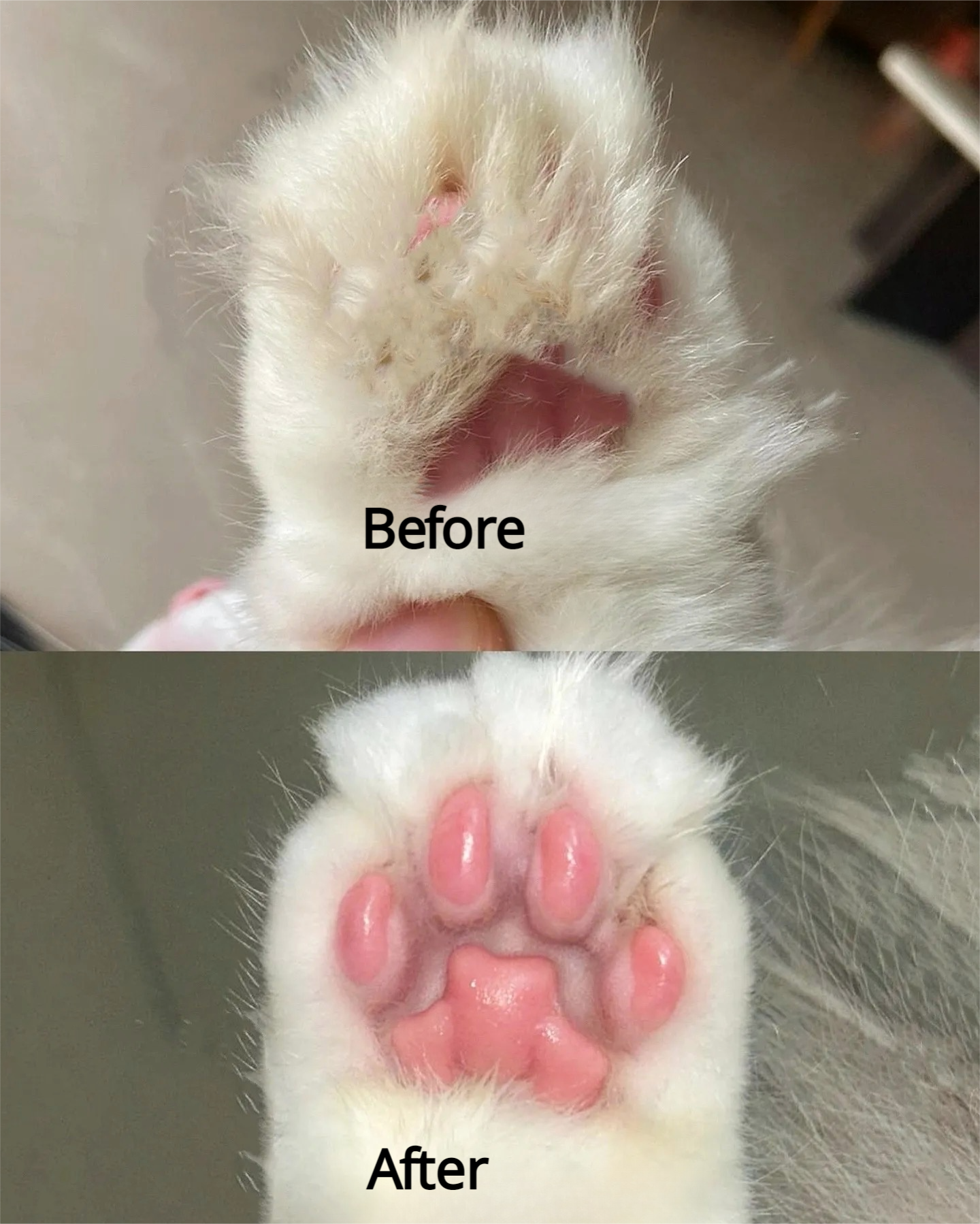
How to Trim Paw Hair Safely: 3 Steps
1. Choose the Right Tool:
- Ceramic Blades: Opt for a trimmer with ceramic blades (like the [GentlePaw Pro]
https://cuddly-pet.com/products/pet-shaver-p1-%E2%80%93-ultra-quiet-r-blade-pet-grooming-trimmer-with-led-light-90min-runtime
—they stay cool and won’t nick delicate skin.
- LED Light: A built-in light illuminates hard-to-see areas, ensuring precise trimming.
- Low Noise: Quiet motors reduce stress for noise-sensitive pets.
2. Trim Gradually:
- Brush the paw first to remove debris.
- Hold the trimmer at a 45° angle and trim in the direction of hair growth.
- Focus on hair between the pads and around the toes.
3. Post-Trim Care:
- Wipe paws with a pet-safe antiseptic wipe.
- Apply a soothing balm if the skin appears irritated.
Why the GentlePaw Pro Trimmer Stands Out
- Safe Design: Ceramic blades + rounded tips prevent cuts.
-Versatile Use: Trim paw hair, ear fur, or eye-area fluff.
- Rechargeable & Cordless: Perfect for anxious pets who squirm.
- Easy Cleanup: Detachable blades can be rinsed under water.
Common Myths Debunked
- “Cats Don’t Need Paw Trims”: False! All pets benefit from trimmed paw hair, especially long-haired breeds.
- “Scissors Work Fine”: Scissors risk injury—specialized trimmers are safer.
Pro Tips for Stress-Free Grooming
- Reward Calm Behavior: Offer treats during and after trimming.
- Trim Every 3-4 Weeks: Prevents mats and maintains hygiene.
- Check for Redness: If paws appear inflamed, consult a vet.